Super Obscure Varieties of Heirloom Beans

May 3rd, 2013

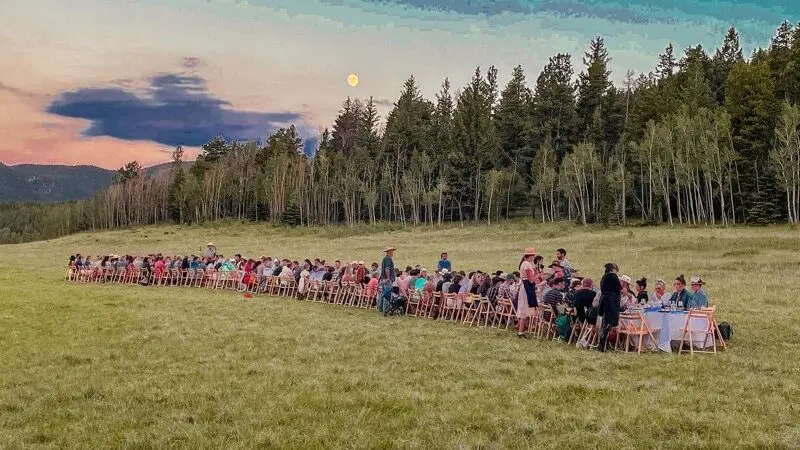
Oh wow, it’s May. If there’s anybody in the world who can explain to me how time has passed so quickly in the year 2013, I’d love to buy them a drink while they fill me in. Tomorrow is our first farm dinner of the season. Jim’s cooking a feast at Happy Boy Farms in Hollister, our new tour crew is making packing lists and slowly trickling into the Santa Cruz area, I’m nursing an addiction to Heritage O’s, a Cheerio-esque cereal made of spelt and kamut flour…there’s A LOT going on!

It was almost a year ago that our 2012 traveling tour crew took a field trip to Hollister with Jim for a hang gliding lesson. I remember Molly kept calling it “hand gliding”.

So amazing. You fly like two feet in the air and you feel like you own the universe.

I’ve been trying to think of ways to initiate our new tour crew. Like, quirky yet helpful lists, things I wish I knew before hitting the road for six months, ways to make the initial smushing of six people who don’t know each other into a rental house, a pickup truck and a life together less…awkward, I guess? Less daunting?

But there’s not really much I can say. They’ll be fine. We were fine! What I can give to them, to you, and as a reminder to myself, is a list of some of the more exciting and obscure ingredients we saw featured on farm dinner menus last season. It will be interesting to see what changes this year. What vegetables chefs decide are like the super special, obscure, most secret, most nuanced, best vegetables EVER. What heirloom variety of corn South Carolina is cultivating these days. What funky, oxidated wines are coming out of California.

It sounds like I’m making fun of it all, but it’s completely the opposite. This is what excites me the most. So, I’d like to share with you a condensed glossary, essentially, of fifteen of the most interesting ingredients compiled from the 90 menus from last year’s farm dinner season. Enjoy, skim, whatever. Here’s to more weird stuff in 2013!

Orange wine: Not actually as interesting as it sounds. Orange wine is made from white wine grapes that have been macerated for an amount of time with their skins. The resulting wine has an orange pigment and subtle tannins from the skins of the grapes.

Sweet cicely: An herbaceous perennial. The leaves are used as an herb, with an anise-like flavor.

Calçots: A type of green onion that looks and tastes like a leek. Calçots are traditionally eaten in the Basque region of Spain, where they are grilled and dipped in romesco sauce.

Glasswort: Sea beans! You’ve probably seen them. They thrive in saline environments like seacoasts and salt marshes. They are crunchy, green and SO salty.

Chiltepin: Tiny, chile peppers native to North and South America that are extremely hot.

Chinese long beans: A vigorous climbing annual vine. The beans are about half a yard long.

Mulefoot hogs: A heritage breed of hog, descended from Spanish hogs brought to Florida in the 1500’s. They have a high fat content, and are good for high quality ham.

Hakurei turnips: This was one of the most popular vegetables on farm dinner menus in 2012. Hakurei turnips are small and white, with a nice sweetness.

Milk thistle: A flowering plant of the daisy family, with antioxidant effects. The leaves make a good spinach substitute!

Peppadew: Sweet, piquante peppers grown in the Limpopo province of South Africa.

Tropea onions: A red onion produced around the village of Tropea in the Calabria region of Italy.

Shungiku: Chrysanthemum greens! David Chang loves these. They are real good when sauteed.

Muskmelon: A species of melon that includes honeydew, cantaloupe and some lesser known varieties such as casaba and Santa Claus melon.

Trifoliate orange: Native to China and Korea. The flesh is very bitter, and perfect for marmalade.

Bloomsdale spinach: An heirloom spinach variety that is SO GOOD. It’s heartier and more substantial than generic spinach.

Sweet Teeth

April 11th, 2013

I think it’s safe to say that we’ve never had two identical dinners. Maybe we’ll have the same chef cooking at the same farm a couple years in a row, since it’s only natural. But the menu is always different, the crowd is different and the weather is definitely the most inconsistent factor of all.

This is one of my favorite elements of the job. We essentially build and tear down a new restaurant every night. We sample the vegetables grown in the dirt of every geographic climate across the United States. We analyze why a strawberry grown in Texas tastes so different than one grown in California. We catch little glimpses inside the minds of different men and women- chefs, who look at an onion and see any number of things. Some see it as perfect how it is- why tamper with something so delicate? Some simply want to enhance it’s qualities by lightly cooking it, pureeing in, or pairing it with other ingredients. Others want to shove it into a CO2 canister, shake it up, and foam it on top of a tower of whimsical, tiny French bonbons. The possibilities are endless, endless, endless.

But, wait! Back to dessert. I have no self control whatsoever when it comes to dessert. I could deny myself meat for a year, but eat an entire pan of brown butter rice crispy treats in one sitting. Some of the most memorable dishes we sampled all season were created by extremely talented pastry chefs who don’t always receive as much acclaim as they ought to.

Pastry is it’s own art, often so much more technically difficult than savory cooking. I looooooove dessert, and often base my dining-out choices on the pastry chef before the chef. One of our guests asked us for the recipes for the desserts served at our dinner at Olana Organic Farm on Kauai, with chef Ron Miller and pastry chef Viren Olsen of Hukilau Lanai. Viren’s desserts were delicious, and she was nice enough to write them out for us so we could share them with you. I hope you try your hand at these treats!

Meyer Lemon Custard

1 cup sugar

3/4 cup meyer lemon juice

1 Tablespoon meyer lemon zest

4 eggs

1/4 teaspoon salt

2 tablespoons cornstarch

11 ounces butter,softened

Whisk together sugar, lemon juice and zest, salt, eggs, and cornstarch in a bowl over a saucepan of simmering water. Whisking constantly, bring the mixture up to a temperature of 180 degrees. If you do not have a thermometer, whisk until thick and hot and no cornstarch granules are detected when you taste the custard. When ready, remove from double boiler and place mixture in a blender or food processor. Turn processor on and let run a few minutes until slightly cooled (custard will still be warm). Slowly add butter a tablespoon at a time, creating an emulsion. Once all butter has been added, let machine run a few minutes until completely cooled. Pour the mixture into custard cups and chill completely before serving.

*Note: Viren’s custard at our dinner was served with a basil tuile and candied tangelo.

Dark Chocolate fudge Tart

4 ounces butter

3 ounces dark chocolate, preferably Hawaiian Chocolate Factory

2 eggs

3/4 cup sugar

1/2 teaspoon salt

2 Tablespoons vanilla rum (or substitute 1 tbsp. vanilla extract)

10 ounces a/p flour

1 ounce cocoa powder

1 teaspoon salt

1/4 cup sugar

1/2 cup heavy cream

1 cup cold butter, cubed

1. Make the crust: combine flour, salt, cocoa powder, sugar and butter in a food processor. Pulse until butter is crumby, but not too fine. Drizzle in cream and pulse a few more times until a dough comes together. turn out onto a work surface,collect any stray crumbs and press the dough into a disc. Wrap with plastic and refrigerate for about 15 minutes or up to a few days. Remove from the fridge, and let soften to workable consistency.

2.  Roll dough to about 1/4 inch thick. Transfer rolled dough to a greased 9 inch tart pan, or alternatively, cut out several small rounds and line mini tart pans. Refrigerate until firm, about one hour. Preheat oven to 325 degrees. Remove tart shell from the fridge and blind bake using pie weights or dry beans, about 15 mins.

3.  Make filling: Melt together butter and chocolate. Let cool. Whisk in eggs, sugar, salt, and rum. Pour into prepared crust. Bake until puffed in center, about 15-20 minutes for mini tarts, 20-25 mins for large tarts.

*Note: Viren’s chocolate tart at our dinner was served with homemade honey marshmallows.

Greetings From The “Off-season”

April 3rd, 2013

People often ask us what we do with ourselves in the off-season. Our tour runs, quickly and consistently, from May through November, but what about those other five months of the year? The “OFF-season”.

It isn’t wrong to assume we have an “on” and “off” season, though these segments of our year might more appropriately be titled “tour” and “tour planning,” or “working from the road” and “working from the office (or in my case, from- you guessed it- coffee shops!)”. Our traveling crew disperses in mid-November, leaving just Jim, Leah and I, our bookkeeper Liz and our PR rep Lisa. Just when we’re getting comfortable (i.e. addicted to Game of Thrones) it’s time for mini-tour in Florida and Hawaii, then time to dive head first into planning 2013’s tour, then suddenly, here we are and it’s April and we have two months (not even) until we’re back on the road again.

In the moments between the emails and phone calls, we eat and drink a lot. We like to call it “research,” smirking cross-eyed at each other over our fourth glass of wine at a cheese festival in Petaluma. Or, sampling cocktails and pimento cheese at San Francisco’s newest darling, Trick Dog. I’m really into this French gentiane liqueur called Suze right now. Does that sound obnoxious? “I’m like REALLY into this like, French gentiane liqueur right now?!” Well, I am! It’s great. It’s kinda like campari, only a little more floral and a little less orange. I first read about it in Amy Stewart’s brand new and endlessly entertaining The Drunken Botanist, basically an encyclopedia of every plant, herb, root and flower and their uses in alcohol over time. Pick this up if you a) enjoy booze, b) think plants are cool or c) have even an ounce of childlike curiosity and an appreciation for history. Or, like, an interest in Harry Potter, cause this is some Wiccan s*%t.

Jim’s “off-season” is his art on-season, really. You probably already know about Jim’s art, but just in case. He’s doing some cool stuff right now. I can’t really give details, but think concentric circles, monorails, new mediums, colors…um, I’ve probably said too much. Use your imagination.

Leah is working ‘round the clock as usual, thinking up all the new projects for the coming season. She got her boots back. That’s an entire blog post in itself, but basically, after leaving her boots at Full Circle Farm in Carnation, Washington in JULY, Leah’s boots arrived on the doorstep of Almond Restaurant in Bridgehampton, New York in February, and finally made their way back to Santa Cruz in March. In the boots package, along with the boots, were a variety of children’s party favors: bubbles, some fish bathtub toys and a gumby keychain. Nobody has any idea what’s going on.

Here, in Austin, the wildflowers are in bloom. So are the cockroaches, but we don’t need to talk about that. I’ve been eating lots of oysters, reading articles about tropical fruit forests in Florida and getting very, very excited for our 2013 tour…aren’t you?

Happy April, everyone!